
Motorcycle Lawyer Marketing

Full-Service Motorcycle Injury
Lawyer Marketing

  • Home
  • Categories
    • SEO
    • Website Design & Branding
    • Community Engagement Strategies
    • Rally & Event Marketing Support
    • Video Marketing
    • Social Media Marketing
  • Blog Posting & Design
  • Email Marketing
June 14.2025
1 Minute Read

Motorcycle Accident Prevention Tips You Can’t Miss

  • Did you know that over 80% of motorcycle accidents result in injury or death ? In this comprehensive guide, you’ll discover vital motorcycle accident prevention strategies, motorcycle safety techniques, and up-to-date helmet law facts to help you stay safe on the road.

motorcycle accident prevention, motorcycle riders in staggered formation on city road with traffic and trees, riding safely

Understanding Motorcycle Accident Prevention: Why It Matters

  • Explore why motorcycle accident prevention is critical, how effective motorcycle safety protocols reduce motorcycle accidents, and the financial and personal impact of motorcycle crashes.

The importance of motorcycle accident prevention cannot be overstated. With the thrill and freedom of motorcycle riding comes a significantly higher risk compared to other motor vehicle travel. According to national highway safety data, motorcycle riders are 28 times more likely to be involved in a fatal crash than occupants in passenger vehicles. Implementing effective motorcycle safety protocols not only saves lives but also reduces the financial, emotional, and physical burdens that result from motorcycle crashes.

By proactively adopting preventative strategies and following current helmet law requirements, motorcycle riders can greatly decrease the risk of personal injury, expensive medical bills, and even loss of work capacity. A single motorcycle accident can have lifelong impacts, which makes understanding and investing in motorcycle accident prevention absolutely crucial for every rider.

What You’ll Learn About Motorcycle Accident Prevention

  • Key statistics illustrating motorcycle accident risks
  • Proven motorcycle accident prevention strategies
  • Current helmet law requirements for riders
  • How to avoid common causes of motorcycle accidents
  • Expert motorcycle safety tips for everyday riding

Motorcycle Accident Statistics: Grasping the Scope of the Issue

Vehicle Type Accident Rate (per 100M miles) % Resulting in Injury % Wearing Helmets Helmet Effectiveness
Motorcycle 35.0 80% 66% Reduces head injury risk by 69%
Car/Passenger Vehicle 2.7 30% NA (seatbelts standard) NA

The Most Frequent Causes of Motorcycle Accidents

  • Driver inattention and distracted driving
  • Speeding and reckless maneuvers
  • Impaired operation
  • Dangerous road conditions

Motorcycle accidents often result from factors directly related to human error or unpredictable road environments. Driver inattention , whether from the motorcycle rider or occupants of other vehicles, is a leading trigger. Distractions from mobile devices, fatigue, or simply overlooking motorcycles during lane changes frequently cause collisions. Additionally, the temptation to speed or perform unsafe maneuvers can heighten the risk of a severe motorcycle crash—even for seasoned riders on the open road.

Impaired operation due to alcohol or drugs remains a persistent concern, significantly increasing the likelihood of a motorcycle accident. Equally hazardous are dangerous road conditions, such as loose gravel, abrupt potholes, or poorly marked intersections. Knowing these common risk factors is essential for adopting prevention strategies that enable safe riding and help reduce the risk of life-altering or deadly injuries.
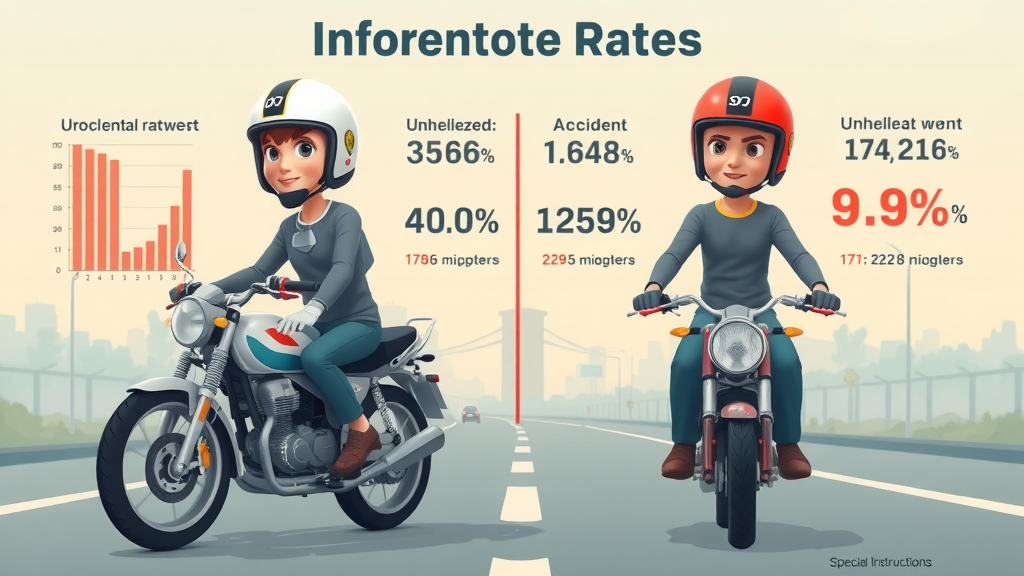
motorcycle accident statistics, infographic comparing helmeted vs unhelmeted crash outcomes, helmet law and crash rates visual

Helmet Law and Motorcycle Helmet Safety: What Every Rider Must Know

  • Helmet law overview: State-by-state summary
  • The proven impact of helmet laws on motorcycle accident rates
  • Motorcycle helmet safety ratings and standards

Helmet laws play a crucial role in protecting riders from tragic outcomes during a motorcycle crash. The United States has a patchwork of helmet law enforcement—some states require all motorcycle operators and passengers to wear DOT-approved helmets, while others have partial laws based on age or insurance. Universal helmet laws have been consistently shown to reduce the risk of head injury and mortality in the event of an accident. States with comprehensive helmet laws report sharp declines in serious and fatal injuries compared to states with relaxed or no helmet requirements.

Motorcycle helmet technology has evolved, with safety standards rigorously evaluated by organizations like the Department of Transportation (DOT), Snell, and ECE. When selecting a helmet for accident prevention, riders should always look for these certifications—ensuring their gear is tested to absorb impact and protect against skull fractures, brain injuries, and even road rash. Helmet use, combined with following local helmet law guidelines, is among the most effective strategies to improve motorcycle safety and save lives.

"Wearing an approved motorcycle helmet can reduce the risk of head injury by over 60%." — National Highway Traffic Safety Administration

Selecting the Best Motorcycle Helmet for Maximum Accident Prevention

  • Full-face vs. open-face vs. modular helmets
  • Essential safety certifications to look for
  • Helmet fit and comfort tips

Choosing the right motorcycle helmet is a vital investment in personal safety. Full-face helmets offer the most comprehensive protection by shielding the entire head and face—crucial in reducing facial and brain injuries caused by high-impact crashes. Open-face and modular helmets provide varying levels of comfort and airflow but may offer less protection in severe motorcycle accidents. Riders should prioritize DOT, Snell, or ECE certification labels when purchasing helmets, confirming their compliance with strict safety standards designed to reduce the risk of head injuries.

Equally important is helmet fit. A properly fitting helmet should feel snug all around, with no pressure points or excessive movement. Motorcycle riders are encouraged to try on different brands and models, confirming comfort for longer rides and ensuring no visual or hearing obstruction. Remember: a helmet that's uncomfortable or fits poorly is less likely to be worn consistently—diminishing its potential to save lives in the event of a crash.

Driving Practices That Support Motorcycle Accident Prevention

  • Defensive riding strategies for motorcycle riders
  • Safe lane positioning and visibility techniques
  • Proper use of signals, mirrors, and lights

Defensive riding is the cornerstone of motorcycle accident prevention . By staying hyper-aware of surrounding vehicles and anticipating potential hazards, motorcycle riders can proactively avoid dangerous encounters. Keeping a safe following distance, especially using techniques like the 4-second rule , gives riders crucial reaction time to brake or swerve away from a sudden traffic threat. Defensive riders also avoid blind spots, scan intersections for oncoming traffic, and regularly check their mirrors to increase visibility —helping to guard against inattentive or reckless motorists.

Proper lane positioning further enhances safety. By riding in a staggered formation when traveling in groups, or in the left or right third of a lane when solo, motorcycle riders optimize their line of sight and make themselves more noticeable to others. Using turn signals, brake lights, and hand signals consistently communicates intentions to drivers, lowering the chance of abrupt or misunderstood maneuvers that can precede a motorcycle crash. Routine mirror checks and shoulder glances before lane changes add a critical layer of accident prevention.

motorcycle safety, vigilant motorcyclist performing shoulder check, accident prevention on urban road

Avoiding High-Risk Situations: Locations and Conditions Prone to Motorcycle Crashes

  • Identifying intersections and urban areas where 70% of motorcycle accidents occur
  • Adapting to hazardous weather and low-light conditions
  • Navigating common road hazards: gravel, potholes, and wet surfaces

Accident data highlights that around 70% of motorcycle crashes occur at or near intersections, especially within densely populated urban areas. Visibility challenges, frequent stops, and unpredictable driver behavior require extra vigilance. Motorcycle riders should always approach intersections at manageable speeds, scan wide for crossing or turning vehicles, and position themselves for quick evasion if needed. Defensive approaches in city environments—where sudden traffic shifts are common—significantly reduce the risk of collision.

Weather and lighting conditions also increase vulnerability. Rain, fog, and dusk or night riding reduce traction and visibility, making it vital to slow down, use reflective gear, and keep headlights on at all times. Hazards like gravel patches, potholes, and painted lines—especially when wet—can cause loss of control or slides leading to road rash or more severe injuries. Motorcycle accident prevention in these conditions means adapting speed, avoiding abrupt movements, and always riding with heightened caution.

motorcycle safety, cautious motorcyclist navigating wet intersection, accident prevention during rain

Motorcycle Accident Prevention Gear Beyond Helmets

  • Jackets, gloves, pants, and boots designed for protection
  • Impact of high-visibility gear and reflective materials on accident prevention
  • Technology: airbag vests and crash detection devices

While helmets are a cornerstone of motorcycle safety , other protective gear plays a crucial role in reducing injury severity and improving visibility to other road users. Durable jackets, gloves, pants, and boots, often crafted with abrasion-resistant materials like Kevlar or leather, provide essential protection against road rash and minimize trauma during a motorcycle crash. High-visibility gear—featuring bright colors or reflective elements—greatly increases your presence, especially at night or in adverse weather, meeting a primary goal of motorcycle accident prevention: to increase your visibility and alertness to others.

Modern advancements in safety gear include airbag vests, which deploy instantly upon sensing a fall, dramatically reducing the risk of spinal and chest injuries. Crash detection devices, integrated into some bikes and gear, can notify emergency personnel instantly in the event of an accident, expediting rescue and care. Smart riders view quality safety apparel and active technology as investments in their own well-being—and essential components of responsible motorcycle riding.

Understanding and Preventing Road Rash in Motorcycle Crashes

  • Protective layers: How abrasion-resistant clothing helps prevent road rash
  • Immediate care steps if road rash occurs after a motorcycle accident

Road rash is a common and painful consequence of sliding across pavement during a motorcycle accident. Wearing specialized, abrasion-resistant gear creates a durable barrier between skin and road, often preventing severe tissue trauma. Leather or synthetic materials, reinforced at points of contact, can dramatically reduce the risk of both road rash and deeper, more serious injuries—making them indispensable for every motorcycle rider.

In the unfortunate event of a crash, immediate care for road rash starts with thoroughly cleaning the affected area to prevent infection, covering wounds with sterile bandages, and seeking prompt medical attention for deep abrasions. Recognizing and swiftly treating road rash limits long-term complications and accelerates healing. Prevention, through investment in high-quality gear and careful, defensive riding, remains the best approach for every rider committed to motorcycle safety.

motorcycle safety gear, helmet, jacket, gloves, boots, pants and airbag vest displayed, accident prevention equipment

Legal Responsibilities and Motorcycle Safety Compliance

  • Following helmet laws and licensing requirements
  • Insurance considerations for motorcycle riders
  • Reporting accidents and the importance of post-crash documentation

Strict adherence to helmet law regulations and proper licensing is not only a legal mandate, but an anchor for community safety. Riders must renew their licenses, pass safety courses, and comply with state-specific helmet laws, which vary widely. Ignoring these requirements may result in fines, higher insurance premiums, or denial of injury compensation in the unfortunate case of a motorcycle crash.

Motorcycle insurance offers both legal compliance and crucial financial protection. Policies may cover medical expenses, property damage, and liability costs—providing peace of mind every time you ride. If you are involved in a motorcycle accident, prompt notification of your insurer and thorough, accurate documentation of the event ensures that you meet all post-crash legal obligations and safeguards your rights under injury law.

Common Myths About Motorcycle Accident Prevention

  • Debunking the myth that experience alone prevents motorcycle accidents
  • Addressing misconceptions on helmet effectiveness and motorcycle safety gear

Many riders believe that sheer experience or advanced riding skills alone will keep them safe on the open road. However, even veteran motorcycle riders remain vulnerable to hazards beyond their control, such as inattentive motorists, unpredictable animals, or sudden changes in road conditions. Adhering to proven motorcycle safety principles and wearing full protective gear is just as vital for seasoned riders as it is for beginners.

Another prevalent myth is that helmets or motorcycle safety gear don’t substantially reduce the risk during an accident. In truth, rigorously tested motorcycle helmets lower the risk of fatal head injury by over 60%, while quality jackets, gloves, and boots further cut the chances of severe injury. Trusting facts and science-based research, rather than misconceptions, is key to developing habits that genuinely reduce motorcycle fatalities and trauma.

Essential Motorcycle Safety Training for All Riders

  • Importance of certified rider courses
  • Continuing education for experienced motorcycle riders
  • Resources for beginner and advanced motorcycle safety learning

Attending a certified motorcycle safety course is one of the smartest steps any rider—rookie or veteran—can take. Structured classes provide hands-on instruction in defensive riding, accident evasion, and emergency braking, equipping riders to react calmly in crisis situations. Beyond basic licensure, advanced courses present opportunities for skill refreshment and introduce the latest in traffic safety techniques, promoting lifelong learning in motorcycle accident prevention.

Resources are abundant, ranging from state-run programs and national highway safety administration offerings, to private workshops and online tutorials. Consistent education and hands-on practice empower riders to make safer choices, handle unexpected dangers, and contribute to a culture of responsible motorcycle riding nationwide.

motorcycle safety, group of riders participating in safety training, helmets and gear, accident prevention on closed course

People Also Ask: Motorcycle Accident Prevention Q&A

How to prevent accidents on a motorcycle?

  • Practice defensive riding at all times
  • Wear approved motorcycle helmet and safety gear
  • Obey all traffic laws and speed limits
  • Conduct regular maintenance checks on your bike

Consistent attention to the basics of safe riding—staying alert, following traffic rules, wearing all required safety equipment, and keeping your motorcycle in top mechanical shape—is the foundation for effective motorcycle accident prevention. Combined, these practices reduce the risk of crashes and injuries for every motorcycle rider.

What is the 4-second rule for motorcycles?

  • The 4-second rule helps motorcycle riders keep a safe distance from vehicles ahead, allowing ample time to react and reduce the risk of a motorcycle accident.

Motorcycle riders should always maintain a four-second buffer from the vehicle in front. To use the rule, pick a roadside landmark; when the car ahead passes it, count "one-thousand-one, one-thousand-two, one-thousand-three, one-thousand-four." You shouldn’t pass the landmark before you finish counting. This cushion gives you time to react safely and prevent rear-end collisions, especially in heavy traffic or on slippery roads.

Where do 70% of motorcycle accidents occur?

  • Nearly 70% of motorcycle accidents happen at intersections, often due to visibility issues and right-of-way errors.

Intersections are the most common sites for motorcycle accidents, usually resulting from other drivers failing to notice motorcycles or mistakes determining right-of-way. Riders should be extra cautious at intersections—slowing down, scanning for threats, and preparing to take evasive action at a moment’s notice.

Are motorcycle crash guards worth it?

  • Crash guards can provide critical protection to both the motorcycle and the rider’s legs, helping prevent severe injury in case of a motorcycle crash.

Motorcycle crash guards, also known as engine guards or highway bars, act as a buffer in the event of a crash or low-side accident. They can minimize damage to the bike and help prevent a rider’s leg from being trapped or crushed, reducing the risk and severity of injuries.

Seven Must-Follow Motorcycle Accident Prevention Tips

  1. Always wear a DOT-approved motorcycle helmet
  2. Follow all helmet law regulations in your area
  3. Invest in high-visibility and abrasion-resistant motorcycle safety gear
  4. Practice defensive riding and obey traffic rules
  5. Maintain your bike in top condition to prevent mechanical failures
  6. Avoid risky riding conditions whenever possible (bad weather, low visibility, poorly maintained roads)
  7. Participate in regular motorcycle safety training

Integrating these essential safety measures significantly enhances accident prevention. Each tip, from using properly certified gear to ongoing education, collectively builds a strong foundation for a safe and rewarding motorcycle riding experience. By committing to this multi-layered approach, you reduce both your short-term and lifelong risk.

Expert Perspectives on Motorcycle Accident Prevention

"Motorcycle riders who commit to continuous training and vigilant safety practices can dramatically lower their risk of an accident." — Traffic Safety Expert

This expert insight emphasizes that motorcycle accident prevention is an ongoing process. Remaining vigilant, updating your skills regularly, and always prioritizing safety gear and best practices ensures that you and those you ride with can enjoy the open road with confidence and protection.

Frequently Asked Questions About Motorcycle Accident Prevention

  • How effective are motorcycle helmets in preventing serious injury? Motorcycle helmets are proven to reduce the risk of fatal head injuries by over 60% and prevent many non-fatal but severe injuries in the event of a crash.
  • Are full-face motorcycle helmets safer than half helmets? Yes, full-face helmets provide more comprehensive coverage and protection against impact and road debris compared to half helmets, making them a safer choice for accident prevention.
  • Do motorcycle crash guards reduce injury severity? Crash guards can help minimize injuries by protecting a rider’s legs and reducing the chance of being pinned or trapped in a motorcycle crash.
  • Why is visibility so important for motorcycle riders? Enhanced visibility allows other motorists to notice motorcycles more easily, lowering the risk of right-of-way errors and intersection accidents.
  • Which gear helps most with motorcycle safety? While proper helmets rank highest, a complete set of safety gear—jacket, gloves, boots, pants, and high-visibility accessories—provides the best protection from a variety of crash and environmental hazards.

Key Takeaways for Motorcycle Accident Prevention Success

  • Motorcycle accident prevention requires a combination of equipment, training, and responsible behavior.
  • Adhering to current helmet law regulations and using high-quality motorcycle safety gear are crucial.
  • Regular education and practical skills development are key ongoing investments for every motorcycle rider.

Take Your Motorcycle Safety Seriously — Start Preventing Motorcycle Accidents Today

  • Commit to these motorcycle accident prevention strategies, invest in top-tier motorcycle safety gear, and share this guide with fellow motorcycle riders to ensure everyone remains protected on the road.

Enhancing your understanding of motorcycle accident prevention is crucial for every rider. The article “Tips to Help Prevent Motorcycle Accidents” by State Farm offers comprehensive advice on safety measures, including the importance of regular motorcycle inspections, the benefits of safety courses, and the necessity of wearing appropriate gear. Additionally, “Top 6 Motorcycle Safety Tips” by The Hanover Insurance Group emphasizes the significance of taking safety courses, selecting the right helmet, and the advantages of anti-lock braking systems. If you’re serious about reducing your risk on the road, these resources provide valuable insights to help you ride safely.

Community Engagement Strategies

147 Views

0 Comments

Write A Comment

*
*
Please complete the captcha to submit your comment.
Related Posts All Posts
08.31.2026

Alignment Healthcare Investors Warned About Securities Violations: What You Should Know

Update Unpacking the Allegations Against Alignment Healthcare: What Investors Need to Know On July 8, 2026, troubling news rippled through the financial market as Alignment Healthcare, Inc. (NASDAQ: ALHC) saw its stock plummet by 16.7%. This dramatic drop followed a whistleblower complaint by a former executive, alleging that the company engaged in substantial accounting irregularities. The complaint pointed fingers at how Alignment misclassified millions in operating costs as capital expenditures, raising serious questions about the integrity of the company's reported financial results, including its Adjusted Earnings Before Interest, Taxes, Depreciation, and Amortization (EBITDA). A Closer Look at the Allegations The whistleblower’s claims are not trivial; they suggest that Alignment may have overstated its financial health, misleading investors about its operational performance. According to the complaint, these misrepresentations not only impacted investor confidence but also affected the executive compensation structure tied to financial metrics. While the whistleblower's allegations are still under investigation by Kaplan Fox & Kilsheimer LLP, investors are urged to scrutinize the origin and credibility of these claims carefully. Potential Impact on Investors For shareholders in Alignment Healthcare, this revelation hits close to home. With the stock price dropping from approximately $24.05 to $20.03 after the news broke, many investors may feel anxious about their investments. The circumstances raise critical questions: What does this mean for future financial reports? Will the company recover? Investors keeping a close eye on the developments of this case might benefit from staying informed and connected with the legal proceedings surrounding this investigation. Why Reach Out to Kaplan Fox? Investors who have suffered losses due to these alleged misrepresentations are encouraged to reach out to Kaplan Fox & Kilsheimer LLP. With decades of experience in securities litigation, the firm has established a reputation for holding corporations accountable for their actions, securing massive recoveries on behalf of investors in previous landmark cases. This case against Alignment Healthcare could be an important litmus test for the firm and offer an opportunity for affected investors to unite and amplify their voices against potential corporate malfeasance. The Bigger Picture: Lessons for Investors This incident underscores the critical need for due diligence in today’s complicated financial environment. Investors should always scrutinize company reports, seek transparency, and remember that corporate governance matters matter significantly in assessing a company’s risk profile. With rampant cases of financial misreporting making headlines in recent years, staying informed and vigilant is vital. Final Thoughts: Act on Insights In the complex landscape of stock investing, the differences between a win and a loss often hinge on timely, informed decision-making. The case against Alignment Healthcare serves as a crucial reminder for investors to be proactive in protecting their interests. Stay connected with reliable news sources, consider reaching out to seasoned legal firms like Kaplan Fox, and prioritize transparency when evaluating your investment choices. It's crucial for investors to monitor this situation closely and understand the potential implications it might have on their investment strategy. Don't hesitate to share your insights and experiences regarding corporate accountability in the comments below!

08.27.2026

Join Us for the Exciting Launch of Desert Injury Law at CAALA 2026

Update Celebrating Community Connections: Desert Injury Law's New Chapter As the legal community gears up for CAALA 2026, a special celebratory gathering is on the horizon. Desert Injury Law & Friends is set to officially launch and welcome personal injury and workers’ compensation attorneys from California, Nevada, and Arizona. This exclusive evening, hosted by the vibrant duo Steve Vatarazin and Alina Landver, promises not just a night of cocktails and hors d’oeuvres but a warm platform for professionals to connect, celebrate, and expand their networks. What to Expect at the Launch Party Taking place on September 3, 2026, from 8:30 p.m. to 11:00 p.m., guests can look forward to a delightful atmosphere filled with laughter and networking opportunities. Attendees will enjoy unique experiences like cigar rolling, alongside the chance to mingle with fellow attorneys who share common interests and challenges in their fields. It’s more than a party; it’s a gathering of minds, aimed at fostering relationships that can lead to successful collaborations. The Importance of Professional Networks In today's fast-paced legal environment, building a strong professional network is crucial. This event is not just another gathering; it’s a chance to tap into shared knowledge, exchange insights on industry trends, and support one another in navigating the complexities of personal injury and workers’ compensation law across state lines. With attendance limited and an RSVP required, the intimate setting promises to nurture meaningful connections. Why Every Attorney Should Attend For personal injury and workers' compensation attorneys, participating in community events like the Desert Injury Law & Friends Launch Party can lead to numerous benefits. These include learning best practices from peers, sharing experiences that can help overcome common industry obstacles, and perhaps even finding new mentors. As they say, "it's not just about what you know, but who you know," and this event embodies that ethos perfectly. The Excitement Builds for CAALA 2026 The anticipation is palpable as we approach CAALA 2026. This launch party is positioned to not only mark Desert Injury Law's expansion into desert cities in California but also to underscore the importance of community among legal professionals. It's an opportunity to celebrate achievements and consider future possibilities in a laid-back, engaging environment. Attorneys interested in attending are encouraged to act fast by completing the RSVP form to ensure their spot at this promising event. Prepare to enjoy an evening that blends professional development with a community spirit—a quintessential aspect of legal practice.

08.25.2026

Medline Investors: Your Legal Rights and the Importance of Action

Update Understanding Your Rights as a Medline Investor Investing in companies like Medline Inc. can evoke a wave of emotions, from excitement to uncertainty. With the recent news from Kaplan Fox encouraging investors to contact them regarding their legal rights, it is crucial for investors to understand the intricacies of their situation. This article explores the implications of this legal encouragement and what it could mean for stakeholders. As stakeholders grapple with the potential churn in the marketplace, staying informed is more important than ever. What’s at Stake for Medline Investors? Investors in Medline Inc. are facing a critical juncture that could significantly impact their financial future. The company’s recent developments and operations have raised red flags for some, making it increasingly important for shareholders to assess their position. Furthermore, the encouragement from Kaplan Fox highlights the importance of staying informed and proactive when legal matters are on the table. Many shareholders may not be aware of their options, leaving them vulnerable. In times like these, knowledge can empower investors to make informed decisions about their holdings and strategies moving forward. Legal Perspectives: The Role of Legal Firms in Protecting Investor Rights Engaging with a law firm like Kaplan Fox can provide investors with essential information regarding their rights and possible claims. Their focus is not just on legal assistance but also on educating investors about their avenues. Legal firms serve as a bridge that connects investors to available remedies, fundamentally altering the way individuals view their investments in turbulent times. Investors should recognize that consulting legal experts is not a sign of distrust in the company but rather a means to safeguard their financial interests. This proactive approach can provide much-needed clarity and guidance for navigating the complex world of corporate law. Empowering Shareholders: Why You Should Act Now Time-sensitive decisions can make or break financial outcomes for investors. By contacting Kaplan Fox, Medline investors can gain clarity on their legal rights and next steps. Immediate action prevents the risk of missing out on financial compensation or collective legal actions that could arise from potential discrepancies in company operations. Moreover, with the fast-paced nature of the stock market, timely intervention could create opportunities to mitigate potential losses or even leverage the situation for gains. Therefore, taking the first step to reach out may not only offer reassurance but could also be an essential move in securing one’s financial future. Counterarguments: Is Legal Action Necessary? While some investors may feel apprehensive about pursuing legal action, it’s crucial to consider the potential benefits. Legal assistance can reveal insights that might not be obvious from a standard shareholder perspective. Additionally, understanding the possible outcomes of legal claims might influence personal decisions regarding future investments or continued support of Medline. Some may argue that legal interventions could disrupt business operations or that achieving a favorable outcome is uncertain. However, one must weigh these concerns against the possibility of recovering lost investments or holding the company accountable for any wrongdoing. Future Trends in Investor Rights Awareness The landscape of investor rights continues to evolve, with increased awareness and advocacy emerging within financial markets. As firms like Kaplan Fox lead the charge in supporting investors, we can expect a ripple effect throughout corporate governance. This could result in greater accountability for publicly traded companies, ultimately benefitting shareholders. As more investors become aware of their rights, the pressure on companies to maintain transparent and ethical operations will only increase, fostering a healthier investment climate for everyone. This renewed focus on ethical standards and accountability can not only protect existing investments but also promote better practices within corporations. Conclusion: Take Charge of Your Investment No investor wants to feel powerless, especially in challenging situations. For Medline shareholders, reaching out to Kaplan Fox might be a pivotal step in exercising their rights. Equip yourself with knowledge; take charge of your investment journey today. By doing so, not only are you advocating for yourself but also contributing to a broader shift in investor empowerment. The path forward may be fraught with uncertainty, but becoming proactive can instill a sense of control over your financial destiny. Investors must remember that in the age where investor rights are gaining prominence, being informed and ready to act is key to navigating successfully through the complexities of the market.

We believe great marketing starts with trust — especially in the motorcycle world.

At SeamanDan LLC, we specialize in helping motorcycle personal injury law firms build brands that resonate with riders and drive high-value case leads.

We know that the motorcycle community is different. Riders don’t trust just any lawyer — and they certainly don’t trust spammy ads or stock-photo websites. They trust those who understand their world and respect their values: loyalty, authenticity, and community.

That’s where we come in. Our team brings together:

.  Deep expertise in digital marketing for personal injury law firms
.  A rider-first perspective on branding and community engagement
.  Proven experience helping motorcycle-focused law firms dominate local search and grow sustainably.

Whether you’re sponsoring rallies, building connections with local clubs, or simply want your digital presence to match your commitment to riders, we help you create a marketing engine that reflects who you are — and earns the trust of the community you serve.

We don’t do generic legal marketing. We help motorcycle lawyers ride ahead of the pack — with marketing that actually works.

Ready to take your practice to the next level?
Let’s talk.

© 2026 SeamanDan LLC All Rights Reserved. 810 N Main St #187, Spearfish, SD 57783 . Contact Us . Terms of Service . Privacy Policy

eyJjb21wYW55IjoiU2VhbWFuRGFuIExMQyIsImFkZHJlc3MiOiI4MTAgTiBNYWluIFN0ICMxODciLCJjaXR5IjoiIFNwZWFyZmlzaCIsInN0YXRlIjoiU0QiLCJ6aXAiOiI1Nzc4MyIsImVtYWlsIjoic2VhbWFuZGFuQHNlYW1hbmRhbi5jb20iLCJ0b3MiOiJQSEErUEhOMGNtOXVaejQ4WlcwK1YyaGxiaUI1YjNVZ2MybG5iaTFwYmlCM2FYUm9JSFZ6TENCNWIzVWdZWEpsSUdkcGRtbHVaeVp1WW5Od095QjViM1Z5SUhCbGNtMXBjM05wYjI0Z1lXNWtJR052Ym5ObGJuUWdkRzhnYzJWdVpDQjViM1VnWlcxaGFXd2dZVzVrTDI5eUlGTk5VeUIwWlhoMElHMWxjM05oWjJWekxpQkNlU0JqYUdWamEybHVaeUIwYUdVZ1ZHVnliWE1nWVc1a0lFTnZibVJwZEdsdmJuTWdZbTk0SUdGdVpDQmllU0J6YVdkdWFXNW5JR2x1SUhsdmRTQmhkWFJ2YldGMGFXTmhiR3g1SUdOdmJtWnBjbTBnZEdoaGRDQjViM1VnWVdOalpYQjBJR0ZzYkNCMFpYSnRjeUJwYmlCMGFHbHpJR0ZuY21WbGJXVnVkQzQ4TDJWdFBqd3ZjM1J5YjI1blBqd3ZjRDRLQ2p4d1BtaDBkSEJ6T2k4dlptTnRieTV6WldGdFlXNWtZVzR1WTI5dEwySnBhMlZ5YkdGM1BDOXdQZ29LUEhBK0ptNWljM0E3UEM5d1Bnb0tQSEErUEhOMGNtOXVaejVUUlZKV1NVTkZQQzl6ZEhKdmJtYytQQzl3UGdvS1BIQStWMlVnY0hKdmRtbGtaU0JoSUhObGNuWnBZMlVnZEdoaGRDQmpkWEp5Wlc1MGJIa2dZV3hzYjNkeklIbHZkU0IwYnlCeVpXTmxhWFpsSUhKbGNYVmxjM1J6SUdadmNpQm1aV1ZrWW1GamF5d2dZMjl0Y0dGdWVTQnBibVp2Y20xaGRHbHZiaXdnY0hKdmJXOTBhVzl1WVd3Z2FXNW1iM0p0WVhScGIyNHNJR052YlhCaGJua2dZV3hsY25SekxDQmpiM1Z3YjI1ekxDQmthWE5qYjNWdWRITWdZVzVrSUc5MGFHVnlJRzV2ZEdsbWFXTmhkR2x2Ym5NZ2RHOGdlVzkxY2lCbGJXRnBiQ0JoWkdSeVpYTnpJR0Z1WkM5dmNpQmpaV3hzZFd4aGNpQndhRzl1WlNCdmNpQmtaWFpwWTJVdUlGbHZkU0IxYm1SbGNuTjBZVzVrSUdGdVpDQmhaM0psWlNCMGFHRjBJSFJvWlNCVFpYSjJhV05sSUdseklIQnliM1pwWkdWa0lDWnhkVzkwTzBGVExVbFRKbkYxYjNRN0lHRnVaQ0IwYUdGMElIZGxJR0Z6YzNWdFpTQnVieUJ5WlhOd2IyNXphV0pwYkdsMGVTQm1iM0lnZEdobElIUnBiV1ZzYVc1bGMzTXNJR1JsYkdWMGFXOXVMQ0J0YVhNdFpHVnNhWFpsY25rZ2IzSWdabUZwYkhWeVpTQjBieUJ6ZEc5eVpTQmhibmtnZFhObGNpQmpiMjF0ZFc1cFkyRjBhVzl1Y3lCdmNpQndaWEp6YjI1aGJHbDZZWFJwYjI0Z2MyVjBkR2x1WjNNdVBDOXdQZ29LUEhBK1dXOTFJR0Z5WlNCeVpYTndiMjV6YVdKc1pTQm1iM0lnYjJKMFlXbHVhVzVuSUdGalkyVnpjeUIwYnlCMGFHVWdVMlZ5ZG1salpTQmhibVFnZEdoaGRDQmhZMk5sYzNNZ2JXRjVJR2x1ZG05c2RtVWdkR2hwY21RZ2NHRnlkSGtnWm1WbGN5QW9jM1ZqYUNCaGN5QlRUVk1nZEdWNGRDQnRaWE56WVdkbGN5d2dTVzUwWlhKdVpYUWdjMlZ5ZG1salpTQndjbTkyYVdSbGNpQnZjaUJqWld4c2RXeGhjaUJoYVhKMGFXMWxJR05vWVhKblpYTXBMaUJaYjNVZ1lYSmxJSEpsYzNCdmJuTnBZbXhsSUdadmNpQjBhRzl6WlNCbVpXVnpMQ0JwYm1Oc2RXUnBibWNnZEdodmMyVWdabVZsY3lCaGMzTnZZMmxoZEdWa0lIZHBkR2dnZEdobElHUnBjM0JzWVhrZ2IzSWdaR1ZzYVhabGNua2diMllnWldGamFDQlRUVk1nZEdWNGRDQnRaWE56WVdkbElITmxiblFnZEc4Z2VXOTFJR0o1SUhWekxpQkpiaUJoWkdScGRHbHZiaXdnZVc5MUlHMTFjM1FnY0hKdmRtbGtaU0JoYm1RZ1lYSmxJSEpsYzNCdmJuTnBZbXhsSUdadmNpQmhiR3dnWlhGMWFYQnRaVzUwSUc1bFkyVnpjMkZ5ZVNCMGJ5QmhZMk5sYzNNZ2RHaGxJRk5sY25acFkyVWdZVzVrSUhKbFkyVnBkbVVnZEdobElGTk5VeUIwWlhoMElHMWxjM05oWjJWekxpQlhaU0JrYnlCdWIzUWdZMmhoY21kbElHRnVlU0JtWldWeklHWnZjaUJrWld4cGRtVnllU0J2WmlCbGJXRnBiQ0J2Y2lCVFRWTXVJRlJvYVhNZ2FYTWdZU0JtY21WbElITmxjblpwWTJVZ2NISnZkbWxrWldRZ1lua2dkWE11SUVodmQyVjJaWElzSUhCc1pXRnpaU0JqYUdWamF5QjNhWFJvSUhsdmRYSWdhVzUwWlhKdVpYUWdjMlZ5ZG1salpTQndjbTkyYVdSbGNpQmhibVFnWTJWc2JIVnNZWElnWTJGeWNtbGxjaUJtYjNJZ1lXNTVJR05vWVhKblpYTWdkR2hoZENCdFlYa2dhVzVqZFhJZ1lYTWdZU0J5WlhOMWJIUWdabkp2YlNCeVpXTmxhWFpwYm1jZ1pXMWhhV3dnWVc1a0lGTk5VeUIwWlhoMElHMWxjM05oWjJWeklIUm9ZWFFnZDJVZ1pHVnNhWFpsY2lCMWNHOXVJSGx2ZFhJZ2IzQjBMV2x1SUdGdVpDQnlaV2RwYzNSeVlYUnBiMjRnZDJsMGFDQnZkWElnWlcxaGFXd2dZVzVrSUZOTlV5QnpaWEoyYVdObGN5NGdXVzkxSUdOaGJpQmpZVzVqWld3Z1lYUWdZVzU1SUhScGJXVXVJRXAxYzNRZ2RHVjRkQ0FtY1hWdmREdFRWRTlRSm5GMWIzUTdJSFJ2SUR4b2FXZG9iR2xuYUhRZ1kyeGhjM005SW1OdmJYQmhibmxRYUc5dVpWVndaR0YwWlNJK05qQTFMVE0wTUMweE9UYzJQQzlvYVdkb2JHbG5hSFErTGlCQlpuUmxjaUI1YjNVZ2MyVnVaQ0IwYUdVZ1UwMVRJRzFsYzNOaFoyVWdKbkYxYjNRN1UxUlBVQ1p4ZFc5ME95QjBieUIxY3l3Z2QyVWdkMmxzYkNCelpXNWtJSGx2ZFNCaGJpQlRUVk1nYldWemMyRm5aU0IwYnlCamIyNW1hWEp0SUhSb1lYUWdlVzkxSUdoaGRtVWdZbVZsYmlCMWJuTjFZbk5qY21saVpXUXVJRUZtZEdWeUlIUm9hWE1zSUhsdmRTQjNhV3hzSUc1dklHeHZibWRsY2lCeVpXTmxhWFpsSUZOTlV5QnRaWE56WVdkbGN5Qm1jbTl0SUhWekxqd3ZjRDRLQ2p4d1BqeHpkSEp2Ym1jK1dVOVZVaUJTUlVkSlUxUlNRVlJKVDA0Z1QwSk1TVWRCVkVsUFRsTThMM04wY205dVp6NDhMM0ErQ2dvOGNENUpiaUJqYjI1emFXUmxjbUYwYVc5dUlHOW1JSGx2ZFhJZ2RYTmxJRzltSUhSb1pTQlRaWEoyYVdObExDQjViM1VnWVdkeVpXVWdkRzg2UEM5d1Bnb0tQRzlzUGdvSlBHeHBQbkJ5YjNacFpHVWdkSEoxWlN3Z1lXTmpkWEpoZEdVc0lHTjFjbkpsYm5RZ1lXNWtJR052YlhCc1pYUmxJR2x1Wm05eWJXRjBhVzl1SUdGaWIzVjBJSGx2ZFhKelpXeG1JR0Z6SUhCeWIyMXdkR1ZrSUdKNUlIUm9aU0JUWlhKMmFXTmxKaU16T1R0eklISmxaMmx6ZEhKaGRHbHZiaUJtYjNKdElDaHpkV05vSUdsdVptOXliV0YwYVc5dUlHSmxhVzVuSUhSb1pTQW1jWFZ2ZER0U1pXZHBjM1J5WVhScGIyNGdSR0YwWVNaeGRXOTBPeWtnWVc1a1BDOXNhVDRLQ1R4c2FUNXRZV2x1ZEdGcGJpQmhibVFnY0hKdmJYQjBiSGtnZFhCa1lYUmxJSFJvWlNCU1pXZHBjM1J5WVhScGIyNGdSR0YwWVNCMGJ5QnJaV1Z3SUdsMElIUnlkV1VzSUdGalkzVnlZWFJsTENCamRYSnlaVzUwSUdGdVpDQmpiMjF3YkdWMFpTNGdTV1lnZVc5MUlIQnliM1pwWkdVZ1lXNTVJR2x1Wm05eWJXRjBhVzl1SUhSb1lYUWdhWE1nZFc1MGNuVmxMQ0JwYm1GalkzVnlZWFJsTENCdWIzUWdZM1Z5Y21WdWRDQnZjaUJwYm1OdmJYQnNaWFJsTENCdmNpQjNaU0JvWVhabElISmxZWE52Ym1GaWJHVWdaM0p2ZFc1a2N5QjBieUJ6ZFhOd1pXTjBJSFJvWVhRZ2MzVmphQ0JwYm1admNtMWhkR2x2YmlCcGN5QjFiblJ5ZFdVc0lHbHVZV05qZFhKaGRHVXNJRzV2ZENCamRYSnlaVzUwSUc5eUlHbHVZMjl0Y0d4bGRHVXNJSGRsSUdoaGRtVWdkR2hsSUhKcFoyaDBJSFJ2SUhOMWMzQmxibVFnYjNJZ1BITjBjbTl1Wno0OGMzQmhiaUJ6ZEhsc1pUMGlZMjlzYjNJNkkwWkdNREF3TURzaVBuUmxjbTFwYm1GMFpTQjViM1Z5SUdGalkyOTFiblF2Y0hKdlptbHNaU0JoYm1RZ2NtVm1kWE5sSUdGdWVTQmhibVFnWVd4c0lHTjFjbkpsYm5RZ2IzSWdablYwZFhKbElIVnpaU0J2WmlCMGFHVWdVMlZ5ZG1salpTQW9iM0lnWVc1NUlIQnZjblJwYjI0Z2RHaGxjbVZ2WmlrdVBDOXpjR0Z1UGp3dmMzUnliMjVuUGp3dmJHaytDand2YjJ3K0NnbzhjRDRtYm1KemNEczhMM0ErQ2p4b2FXZG9iR2xuYUhRZ1kyeGhjM005SW1OdmJYQmhibmxPWVcxbFZYQmtZWFJsSWo1VFpXRnRZVzVFWVc0Z1RFeERQQzlvYVdkb2JHbG5hSFErUEdKeUlDOCtDanhvYVdkb2JHbG5hSFFnWTJ4aGMzTTlJbU52YlhCaGJubEJaR1J5WlhOelZYQmtZWFJsSWo0NE1UQWdUaUJOWVdsdUlGTjBJQ014T0Rjc0lGTndaV0Z5Wm1semFDd2dVMFFnTlRjM09ETThMMmhwWjJoc2FXZG9kRDQ4WW5JZ0x6NEtQR2hwWjJoc2FXZG9kQ0JqYkdGemN6MGlZMjl0Y0dGdWVWQm9iMjVsVlhCa1lYUmxJajQyTURVdE16UXdMVEU1TnpZOEwyaHBaMmhzYVdkb2RENDhZbklnTHo0S1BHaHBaMmhzYVdkb2RDQmpiR0Z6Y3owaVkyOXRjR0Z1ZVVWdFlXbHNWWEJrWVhSbElqNXpaV0Z0WVc1a1lXNUFjMlZoYldGdVpHRnVMbU52YlR3dmFHbG5hR3hwWjJoMFBnPT0iLCJwcml2YWN5IjoiUEhBK1BITjBjbTl1Wno1UVVrbFdRVU5aUEM5emRISnZibWMrUEM5d1Bnb0tQSEErUEhOMGNtOXVaejVVYUdVZ2FXNW1iM0p0WVhScGIyNGdjSEp2ZG1sa1pXUWdaSFZ5YVc1bklIUm9hWE1nY21WbmFYTjBjbUYwYVc5dUlHbHpJR3RsY0hRZ2NISnBkbUYwWlNCaGJtUWdZMjl1Wm1sa1pXNTBhV0ZzTENCaGJtUWdkMmxzYkNCdVpYWmxjaUJpWlNCa2FYTjBjbWxpZFhSbFpDd2dZMjl3YVdWa0xDQnpiMnhrTENCMGNtRmtaV1FnYjNJZ2NHOXpkR1ZrSUdsdUlHRnVlU0IzWVhrc0lITm9ZWEJsSUc5eUlHWnZjbTB1SUZSb2FYTWdhWE1nYjNWeUlHZDFZWEpoYm5SbFpTNDhMM04wY205dVp6NDhMM0ErQ2dvOGNENDhjM1J5YjI1blBrbE9SRVZOVGtsVVdUd3ZjM1J5YjI1blBqd3ZjRDRLQ2p4d1BqeGxiVDVaYjNVZ1lXZHlaV1VnZEc4Z2FXNWtaVzF1YVdaNUlHRnVaQ0JvYjJ4a0lIVnpMQzRnWVc1a0lHbDBjeUJ6ZFdKemFXUnBZWEpwWlhNc0lHRm1abWxzYVdGMFpYTXNJRzltWm1salpYSnpMQ0JoWjJWdWRITXNJR052TFdKeVlXNWtaWEp6SUc5eUlHOTBhR1Z5SUhCaGNuUnVaWEp6TENCaGJtUWdaVzF3Ykc5NVpXVnpMQ0JvWVhKdGJHVnpjeUJtY205dElHRnVlU0JqYkdGcGJTQnZjaUJrWlcxaGJtUXNJR2x1WTJ4MVpHbHVaeUJ5WldGemIyNWhZbXhsSUdGMGRHOXlibVY1Y3lZak16azdJR1psWlhNc0lHMWhaR1VnWW5rZ1lXNTVJSFJvYVhKa0lIQmhjblI1SUdSMVpTQjBieUJ2Y2lCaGNtbHphVzVuSUc5MWRDQnZaaUJEYjI1MFpXNTBJSGx2ZFNCeVpXTmxhWFpsTENCemRXSnRhWFFzSUhKbGNHeDVMQ0J3YjNOMExDQjBjbUZ1YzIxcGRDQnZjaUJ0WVd0bElHRjJZV2xzWVdKc1pTQjBhSEp2ZFdkb0lIUm9aU0JUWlhKMmFXTmxMQ0I1YjNWeUlIVnpaU0J2WmlCMGFHVWdVMlZ5ZG1salpTd2dlVzkxY2lCamIyNXVaV04wYVc5dUlIUnZJSFJvWlNCVFpYSjJhV05sTENCNWIzVnlJSFpwYjJ4aGRHbHZiaUJ2WmlCMGFHVWdWRTlUTENCdmNpQjViM1Z5SUhacGIyeGhkR2x2YmlCdlppQmhibmtnY21sbmFIUnpJRzltSUdGdWIzUm9aWEl1UEM5bGJUNDhMM0ErQ2dvOGNENDhjM1J5YjI1blBrUkpVME5NUVVsTlJWSWdUMFlnVjBGU1VrRk9WRWxGVXp3dmMzUnliMjVuUGp3dmNENEtDanh3UGp4emRISnZibWMrV1U5VklFVllVRkpGVTFOTVdTQlZUa1JGVWxOVVFVNUVJRUZPUkNCQlIxSkZSU0JVU0VGVU9qd3ZjM1J5YjI1blBqd3ZjRDRLQ2p4dmJENEtDVHhzYVQ1WlQxVlNJRlZUUlNCUFJpQlVTRVVnVTBWU1ZrbERSU0JKVXlCQlZDQlpUMVZTSUZOUFRFVWdVa2xUU3k0Z1ZFaEZJRk5GVWxaSlEwVWdTVk1nVUZKUFZrbEVSVVFnVDA0Z1FVNGdKbkYxYjNRN1FWTWdTVk1tY1hWdmREc2dRVTVFSUNaeGRXOTBPMEZUSUVGV1FVbE1RVUpNUlNaeGRXOTBPeUJDUVZOSlV5NGdMQzRnUVU1RUlGVlRMQ0JKVkNZak16azdVeUJEVlZOVVQwMUZVbE1zSUVWWVVGSkZVMU5NV1NCRVNWTkRURUZKVFZNZ1FVeE1JRmRCVWxKQlRsUkpSVk1nVDBZZ1FVNVpJRXRKVGtRc0lGZElSVlJJUlZJZ1JWaFFVa1ZUVXlCUFVpQkpUVkJNU1VWRUxDQkpUa05NVlVSSlRrY3NJRUpWVkNCT1QxUWdURWxOU1ZSRlJDQlVUeUJVU0VVZ1NVMVFURWxGUkNCWFFWSlNRVTVVU1VWVElFOUdJRTFGVWtOSVFVNVVRVUpKVEVsVVdTd2dSa2xVVGtWVFV5QkdUMUlnUVNCUVFWSlVTVU5WVEVGU0lGQlZVbEJQVTBVZ1FVNUVJRTVQVGkxSlRrWlNTVTVIUlUxRlRsUXVQQzlzYVQ0S0NUeHNhVDVOUVV0RlV5Qk9UeUJYUVZKU1FVNVVXU0JVU0VGVUlDaHBLU0JVU0VVZ1UwVlNWa2xEUlNCWFNVeE1JRTFGUlZRZ1dVOVZVaUJTUlZGVlNWSkZUVVZPVkZNc0lDaHBhU2tnVkVoRklGTkZVbFpKUTBVZ1YwbE1UQ0JDUlNCVlRrbE9WRVZTVWxWUVZFVkVMQ0JVU1UxRlRGa3NJRk5GUTFWU1JTd2dUMUlnUlZKU1QxSXRSbEpGUlN3Z0tHbHBhU2tnVkVoRklGSkZVMVZNVkZNZ1ZFaEJWQ0JOUVZrZ1FrVWdUMEpVUVVsT1JVUWdSbEpQVFNCVVNFVWdWVk5GSUU5R0lGUklSU0JUUlZKV1NVTkZJRmRKVEV3Z1FrVWdRVU5EVlZKQlZFVWdUMUlnVWtWTVNVRkNURVVzSUVGT1JDQW9hWFlwSUVGT1dTQkZVbEpQVWxNZ1NVNGdWRWhGSUZOUFJsUlhRVkpGSUZkSlRFd2dRa1VnUTA5U1VrVkRWRVZFTGp3dmJHaytDZ2s4YkdrK1FVNVpJRTFCVkVWU1NVRk1JRVJQVjA1TVQwRkVSVVFnVDFJZ1QxUklSVkpYU1ZORklFOUNWRUZKVGtWRUlGUklVazlWUjBnZ1ZFaEZJRlZUUlNCUFJpQlVTRVVnVTBWU1ZrbERSU0JKVXlCRVQwNUZJRUZVSUZsUFZWSWdUMWRPSUVSSlUwTlNSVlJKVDA0Z1FVNUVJRkpKVTBzZ1FVNUVJRlJJUVZRZ1dVOVZJRmRKVEV3Z1FrVWdVMDlNUlV4WklGSkZVMUJQVGxOSlFreEZJRVpQVWlCQlRsa2dSRUZOUVVkRklGUlBJRmxQVlZJZ1EwOU5VRlZVUlZJZ1UxbFRWRVZOSUU5U0lFeFBVMU1nVDBZZ1JFRlVRU0JVU0VGVUlGSkZVMVZNVkZNZ1JsSlBUU0JVU0VVZ1JFOVhUa3hQUVVRZ1QwWWdRVTVaSUZOVlEwZ2dUVUZVUlZKSlFVd3VQQzlzYVQ0S0NUeHNhVDVPVHlCQlJGWkpRMFVnVDFJZ1NVNUdUMUpOUVZSSlQwNHNJRmRJUlZSSVJWSWdUMUpCVENCUFVpQlhVa2xVVkVWT0xDQlBRbFJCU1U1RlJDQkNXU0JaVDFVZ1JsSlBUU0JQVWlCVVNGSlBWVWRJSUU5U0lFWlNUMDBnVkVoRklGTkZVbFpKUTBVZ1UwaEJURXdnUTFKRlFWUkZJRUZPV1NCWFFWSlNRVTVVV1NCT1QxUWdSVmhRVWtWVFUweFpJRk5VUVZSRlJDQkpUaUJVU0VVZ1ZFOVRMand2YkdrK0Nqd3ZiMncrQ2dvOGNENDhjM1J5YjI1blBreEpUVWxVUVZSSlQwNGdUMFlnVEVsQlFrbE1TVlJaUEM5emRISnZibWMrUEM5d1Bnb0tQSEErV1U5VklFVllVRkpGVTFOTVdTQlZUa1JGVWxOVVFVNUVJRUZPUkNCQlIxSkZSU0JVU0VGVUlFRk9SQ0JUU0VGTVRDQk9UMVFnUWtVZ1RFbEJRa3hGSUVaUFVpQkJUbGtnUkVsU1JVTlVMQ0JKVGtSSlVrVkRWQ3dnU1U1RFNVUkZUbFJCVEN3Z1UxQkZRMGxCVEN3Z1EwOU9VMFZSVlVWT1ZFbEJUQ0JQVWlCRldFVk5VRXhCVWxrZ1JFRk5RVWRGVXl3Z1NVNURURlZFU1U1SElFSlZWQ0JPVDFRZ1RFbE5TVlJGUkNCVVR5d2dSRUZOUVVkRlV5QkdUMUlnVEU5VFV5QlBSaUJRVWs5R1NWUlRMQ0JIVDA5RVYwbE1UQ3dnVlZORkxDQkVRVlJCSUU5U0lFOVVTRVZTSUVsT1ZFRk9SMGxDVEVVZ1RFOVRVMFZUSUNoRlZrVk9JRWxHSUVoQlV5QkNSVVZPSUVGRVZrbFRSVVFnVDBZZ1ZFaEZJRkJQVTFOSlFrbE1TVlJaSUU5R0lGTlZRMGdnUkVGTlFVZEZVeWtzSUZKRlUxVk1WRWxPUnlCR1VrOU5Pand2Y0Q0S0NqeHZiRDRLQ1R4c2FUNVVTRVVnVlZORklFOVNJRlJJUlNCSlRrRkNTVXhKVkZrZ1ZFOGdWVk5GSUZSSVJTQlRSVkpXU1VORk96d3ZiR2srQ2drOGJHaytWRWhGSUVOUFUxUWdUMFlnVUZKUFExVlNSVTFGVGxRZ1QwWWdVMVZDVTFSSlZGVlVSU0JIVDA5RVV5QkJUa1FnVTBWU1ZrbERSVk1nVWtWVFZVeFVTVTVISUVaU1QwMGdRVTVaSUVkUFQwUlRMQ0JFUVZSQkxDQkpUa1pQVWsxQlZFbFBUaUJQVWlCVFJWSldTVU5GVXlCUVZWSkRTRUZUUlVRZ1QxSWdUMEpVUVVsT1JVUWdUMUlnVFVWVFUwRkhSVk1nVWtWRFJVbFdSVVFnVDFJZ1ZGSkJUbE5CUTFSSlQwNVRJRVZPVkVWU1JVUWdTVTVVVHlCVVNGSlBWVWRJSUU5U0lFWlNUMDBnVkVoRklGTkZVbFpKUTBVN1BDOXNhVDRLQ1R4c2FUNVZUa0ZWVkVoUFVrbGFSVVFnUVVORFJWTlRJRlJQSUU5U0lFRk1WRVZTUVZSSlQwNGdUMFlnV1U5VlVpQlVVa0ZPVTAxSlUxTkpUMDVUSUU5U0lFUkJWRUU3UEM5c2FUNEtDVHhzYVQ1VFZFRlVSVTFGVGxSVElFOVNJRU5QVGtSVlExUWdUMFlnUVU1WklGUklTVkpFSUZCQlVsUlpJRTlPSUZSSVJTQlRSVkpXU1VORk95QlBVand2YkdrK0NnazhiR2srUVU1WklFOVVTRVZTSUUxQlZGUkZVaUJTUlV4QlZFbE9SeUJVVHlCVVNFVWdVMFZTVmtsRFJTNDhMMnhwUGdvOEwyOXNQZ29LUEhBK1BIVStRbmtnY21WbmFYTjBaWEpwYm1jZ1lXNWtJSE4xWW5OamNtbGlhVzVuSUhSdklHOTFjaUJsYldGcGJDQmhibVFnVTAxVElITmxjblpwWTJVc0lHSjVJRzl3ZEMxcGJpd2diMjVzYVc1bElISmxaMmx6ZEhKaGRHbHZiaUJ2Y2lCaWVTQm1hV3hzYVc1bklHOTFkQ0JoSUdOaGNtUXNJQ1p4ZFc5ME8zbHZkU0JoWjNKbFpTQjBieUIwYUdWelpTQlVSVkpOVXlCUFJpQlRSVkpXU1VORkpuRjFiM1E3SUdGdVpDQjViM1VnWVdOcmJtOTNiR1ZrWjJVZ1lXNWtJSFZ1WkdWeWMzUmhibVFnZEdobElHRmliM1psSUhSbGNtMXpJRzltSUhObGNuWnBZMlVnYjNWMGJHbHVaV1FnWVc1a0lHUmxkR0ZwYkdWa0lHWnZjaUI1YjNVZ2RHOWtZWGt1UEM5MVBqd3ZjRDRLQ2p4d1BpWnVZbk53T3p3dmNENEtQR2hwWjJoc2FXZG9kQ0JqYkdGemN6MGlZMjl0Y0dGdWVVNWhiV1ZWY0dSaGRHVWlQbE5sWVcxaGJrUmhiaUJNVEVNOEwyaHBaMmhzYVdkb2RENDhZbklnTHo0S1BHaHBaMmhzYVdkb2RDQmpiR0Z6Y3owaVkyOXRjR0Z1ZVVGa1pISmxjM05WY0dSaGRHVWlQamd4TUNCT0lFMWhhVzRnVTNRZ0l6RTROeXdnVTNCbFlYSm1hWE5vTENCVFJDQTFOemM0TXp3dmFHbG5hR3hwWjJoMFBqeGljaUF2UGdvOGFHbG5hR3hwWjJoMElHTnNZWE56UFNKamIyMXdZVzU1VUdodmJtVlZjR1JoZEdVaVBqWXdOUzB6TkRBdE1UazNOand2YUdsbmFHeHBaMmgwUGp4aWNpQXZQZ284YUdsbmFHeHBaMmgwSUdOc1lYTnpQU0pqYjIxd1lXNTVSVzFoYVd4VmNHUmhkR1VpUG5ObFlXMWhibVJoYmtCelpXRnRZVzVrWVc0dVkyOXRQQzlvYVdkb2JHbG5hSFErIn0=

Terms of Service

Privacy Policy

Core Modal Title

Sorry, no results found

You Might Find These Articles Interesting

T
Please Check Your Email
We Will Be Following Up Shortly
*
*
*