

Understanding the Quantum Critical Point in Cuprate Superconductors
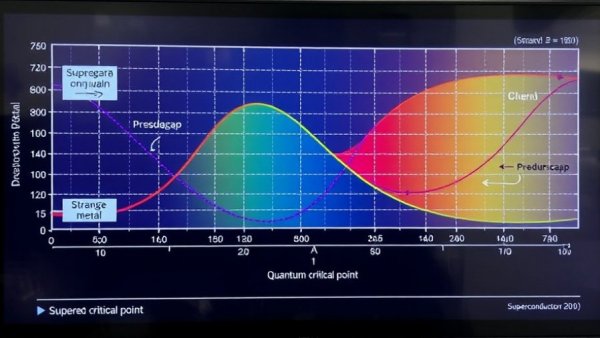
Researchers from National Tsing Hua University (NTHU) have made a groundbreaking discovery in the realm of high-temperature superconductors, identifying a quantum critical point (QCP) in lanthanum strontium copper oxide (LSCO). This landmark finding highlights a significant transition that could reshape our understanding of superconductive materials, which challenge conventional physics by functioning without electrical resistance at elevated temperatures.
The Significance of High-Temperature Superconductors
Superconductors are materials with remarkable properties that include zero electrical resistance and the exclusion of magnetic fields from their interiors when cooled below a certain temperature. The phenomenon of high-temperature superconductivity is particularly enticing, as it offers the potential for efficient energy transmission and groundbreaking technologies, such as magnetic levitation in transport systems. However, the mechanisms behind this state remain poorly understood, partly because of the unique behaviors of cuprate materials, where competing electron orderings introduce layers of complexity into their physical characteristics.
Unveiling the Hidden Quantum Critical Point
For almost four decades, scientists have speculated about the existence of a QCP within the phase diagram of cuprate superconductors, long suspected but elusive due to its occurrence beneath the superconducting dome. This region’s unique traits cause the material to enter a superconducting state without manifesting clear signals of quantum criticality, complicating experimental investigations. The NTHU team’s use of high-resolution resonant inelastic X-ray scattering (RIXS) at the Taiwan Photon Source provided the clarity needed to pinpoint this hidden critical point, revealing essential insights about charge density waves and their interaction with superconductivity.
The Findings of the NTHU Research Team
Led by Dean Chung-Yu Mou, the researchers identified critical distinctions in electronic states on either side of the QCP. Their findings show that one side is characterized by the coexistence of charge density waves, pair density waves, and superconductivity, while the other side supports a robust superconducting state. This division elucidates how various electron orderings influence the superconducting transition, a vital topic that has puzzled physicists for decades.
Implications of the Research
The identification of this QCP not only enriches the current understanding of high-temperature superconductors but also sets the stage for future experimental and theoretical investigations. As Dean Mou articulates, localized quantum critical points are crucial for developing a comprehensive phase diagram that accurately maps how different states interact and transition under various conditions. This could lead to refinement in theoretical models and ultimately drive innovations in superconductive technologies.
Looking Forward: New Directions in Superconductivity Research
This discovery represents a beacon of hope in addressing many unanswered questions surrounding superconductivity. As researchers venture deeper into the complexities of materials like LSCO, the potential for novel applications—spanning quantum computing, energy-efficient power lines, and advanced magnetic systems—becomes increasingly within reach. Future research may focus on exploring other cuprates and similar materials to determine how these quantum critical points might influence their superconductive properties.
Final Thoughts on the Evolution of Superconducting Materials
The journey toward unlocking the secrets of high-temperature superconductivity is far from over. This recent revelation from NTHU stands as a significant stepping stone towards a thorough understanding of quantum critical points. Whether you’re a budding physicist, seasoned researcher, or simply a technology enthusiast, keeping abreast of these developments can provide a richer context for their potential applications in modern technology.






Write A Comment