

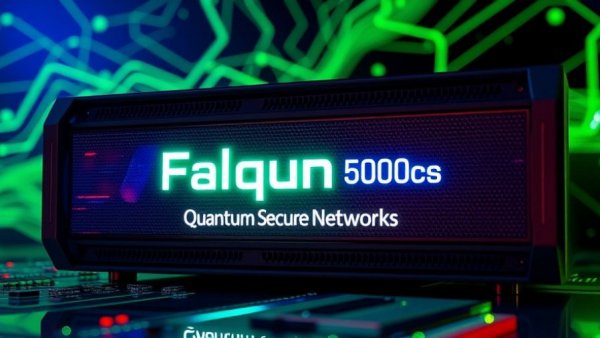
Falcon 5000 Series: A New Frontier in Quantum Secure Networks
The era of quantum secure networks is upon us, and with the launch of the Falcon 5000 Series by Falcon Systems, the landscape of secure communications is set to undergo a transformative shift. Designed to integrate seamlessly into critical digital infrastructures, the Falcon 5000 Series introduces advancements that promise to bolster the security of sensitive communications across various sectors, especially in light of the impending quantum computing revolution.
Meeting the Challenge of Quantum Security
As governments and enterprises scramble to fortify their communication networks against the potential threats posed by quantum computing, solutions like the Falcon 5000 Series emerge as essential tools for ensuring long-term cryptographic security. The series builds on the established Measurement-Device-Independent Quantum Key Distribution (MDI-QKD) architecture, which solves traditional vulnerabilities associated with conventional QKD systems. By removing detector-side-channel weaknesses, the Falcon 5000 Series enhances both security and operational reliability in mission-critical environments.
Why the Falcon 5000 Series Stands Out
The Falcon 5000 Series integrates innovative features like dual-homing and inter-hub connectivity, addressing the need for scalable and adaptable network solutions. By using a network-first architecture, these systems link multiple QKD nodes through shared connectivity hubs instead of relying on dedicated point-to-point fiber connections. This not only simplifies network construction but also significantly reduces costs while ensuring that critical infrastructures remain robust and flexible in the face of increasing demands.
Real-World Applications and Collaborations
Forschungszentrum Jülich, known for its pioneering research in interdisciplinary fields, is set to utilize the Falcon 5000 Series as its launch customer. This partnership not only marks a significant milestone for Falcon Systems but also positions Jülich as a leader in testing the integration of quantum key distribution technology in power system communication networks. Such collaborations highlight the practical implications of quantum security solutions and their potential to reshape industries on a broader scale.
Supporting Europe’s Technological Sovereignty
Dr. Ingrid Romijn, CEO of Falcon Systems, emphasizes the importance of Europe leading the charge in advanced digital infrastructure technologies. As nations gear up for a future where quantum computing becomes mainstream, fostering technological solutions that can be rolled out at scale is pivotal. The Falcon 5000 Series presents an opportune moment for Europe not only to harness technological innovations but also to solidify its position in global technological leadership.
Looking Ahead: The Future of Quantum Cryptography
The launch of the Falcon 5000 Series not only reinforces the viability of quantum secure communications but also introduces opportunities for future advancements. As quantum technologies continue to evolve, there lies an opportunity for continuous improvement in serviceability, operational reliability, and user adaptation. The introduction of redundant power and cooling systems and advanced tamper detection features represents a step towards building resilient networks capable of supporting the demands of modern infrastructures.
Calls for Wider Adoption and Awareness
While the implications of the Falcon 5000 Series are pronounced, awareness around quantum technologies remains limited among the general populace. It is imperative for stakeholders to educate themselves on the complexities and benefits of quantum security to make informed decisions. Understanding these technologies can empower individuals and organizations to leverage innovative solutions to safeguard their communications against the looming threats from quantum computing.
As governments, industries, and individuals face the reality of a quantum future, embracing advanced technologies like Falcon Systems' offerings could be the key to maintaining secure and reliable communication networks.







Write A Comment